Honoring the Memory of the Victims of Hurricane Katrina

As a mark of respect for the victims of Hurricane Katrina, I hereby order, by the authority vested in me by the Constitution and laws of the United States of America, that the flag of the United States shall be flown at half-staff at the White House and on all public buildings and grounds, at all military posts and naval stations, and on all naval vessels of the Federal Government in the District of Columbia and throughout the United States and its Territories and possessions until sunset, Tuesday, September 20, 2005. I also direct that the flag shall be flown at half-staff for the same period at all United States embassies, legations, consular offices, and other facilities abroad, including all military facilities and naval vessels and stations.

Proclamation by the President (September 4, 2005)

The President had also proclaimed that the flag would fly at half-staff to honor Chief Justice Rehnquist. By law that order ended at sunset Tuesday (September 13).

It’s the birthday

… of Margaret Sanger, born on this date in 1879. From her obituary in The New York Times (1966):

As the originator of the phrase “birth control” and its best-known advocate, Margaret Sanger survived Federal indictments, a brief jail term, numerous lawsuits, hundreds of street-corner rallies and raids on her clinics to live to see much of the world accept her view that family planning is a basic human right.

The dynamic, titian-haired woman whose Irish ancestry also endowed her with unfailing charm and persuasive wit was first and foremost a feminist. She sought to create equality between the sexes by freeing women from what she saw as sexual servitude.

… of Hal Wallis, born on this date in 1899. A producer, Wallis was nominated for the Best Picture Oscar 15 times, winning for Casablanca in 1942. Wallis died in 1986.

… of Sam Neill, born in Northern Ireland on this date in 1947. Neill has appeared in numerous films, most famously The Hunt for Red October, Jurassic Park and as the ass-of-a-husband in The Piano.

Who Owns Native Culture?

So what happens in a liberal democracy when Australian Aborigines demand that museum curators forbid all female staff members from handling the indigenous sacred objects that are on display in Sydney, out of respect for the sexual division of the world in Aborigine society? Or when Native American Lakotas object to the desecration of a sacred site by mountain climbers and by New Age religious worshipers, and the sacred site just happens to be Devils Tower National Monument (made famous by the movie ”Close Encounters of the Third Kind”), which is located in a public park in Wyoming?

What code of cultural privacy makes sense when representatives of the Pueblo community complain that the sun symbol on the New Mexico state flag was stolen without permission from a design on a 19th-century ceramic pot made by an anonymous and unidentifiable American Indian potter? What about the disempowered forest-dwelling pygmies of Central Africa? Is there a meaningful modern sense in which they can be said to own their traditional flute music and distinctive form of yodeling, traces of which have diffused throughout the globe and can be detected in Herbie Hancock’s album ”Headhunters” and Madonna’s ”Bedtime Stories”? Should the pygmies be compensated? Why and how? What are our legal responsibilities under such circumstances? What are our moral responsibilities?

From a New York Times review in 2003 of Who Owns Native Culture? by Michael F. Brown (first mentioned by NewMexiKen two-years-ago today). Read a discussion of the Hopi-Voth controversy from the first chapter here.

Award winning stuff to try in ‘Burque

The Rattler at Cliff’s Amusement Park has been ranked one of the best wooden roller coasters in the world. The industry newspaper Amusement Today said fans ranked it 30th of the top 50 wooden coasters.

Cheryl Scantlebury of the Hyatt Regency Tamaya was named Hyatt Hotels’ Chef of the Year. She was chosen from among the executive chefs at the 214 Hyatts worldwide. She has been at Tamaya for four years and with Hyatt for more than 15.

The Albuquerque Tribune

Worse Than Wal-Mart?

Unions hate Wal-Mart, accusing the world’s No. 1 retailer of paying paltry wages and making workers spend too much on health care. Few would describe working as a Wal-Mart greeter as a dream job, but a union protesting work conditions at a Wal-Mart store in Nevada is giving the chain a run for its money, according to Las Vegas Weekly: Temp protesters, hired by the United Food and Commercial Workers International Union to carry anti-Wal-Mart placards in the 104-degree heat, earn a measly $6 an hour, with no benefits at all. “It don’t make no sense, does it?” said one picketer. “We’re sacrificing for the people who work in there, and they don’t even know it.” Another rent-a-protester, who worked for Wal-Mart in the past, had few harsh words for his former employer. “I can’t complain,” he said. “It wasn’t bad.”

Wired News: Furthermore

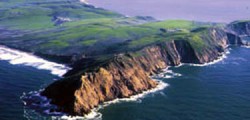
Point Reyes National Seashore

… was established on September 13, 1962. The National Park Service informs us:

Point ReyesPoint Reyes National Seashore contains unique elements of biological and historical interest in a spectacularly scenic panorama of thunderous ocean breakers, open grasslands, bushy hillsides and forested ridges. Native land mammals number about 37 species and marine mammals augment this total by another dozen species. The biological diversity stems from a favorable location in the middle of California and the natural occurrence of many distinct habitats. Nearly 20% of the State’s flowering plant species are represented on the peninsula and over 45% of the bird species in North America have been sighted.
Oh, say can you see …

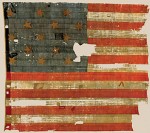
As the evening of September 13, 1814, approached, Francis Scott Key, a young lawyer who had come to negotiate the release of an American friend, was detained in Baltimore harbor on board a British vessel. Throughout the night and into the early hours of the next morning, Key watched as the British bombed nearby Fort McHenry with military rockets. As dawn broke, he was amazed to find the Stars and Stripes, tattered but intact, still flying above Fort McHenry.

Key’s experience during the bombardment of Fort McHenry inspired him to pen the words to “The Star-Spangled Banner.” He adapted his lyrics to the tune of a popular drinking song, “To Anacreon in Heaven,” and the song soon became the de facto national anthem of the United States of America, though Congress did not officially recognize it as such until 1931.

Library of Congress

Star-spangled Banner
The Smithsonian Institution, which has the original “star-spangled banner,” has details about the flag.

More here as well.


It’s the birthday

… of Milton S. Hershey, born on this date in 1857. Hershey, who only completed the fourth grade, developed a formula for milk chocolate that made what had been a luxury product into the first nationally marketed candy.

… of Bill Monroe, born on this date in 1911. The Father of Bluegrass Music was inducted into the Country Music Hall of Fame in 1970. In 1993, Monroe was a recipient of the Lifetime Achievement Award from the National Academy of Recording Arts and Sciences, an honor that placed him in the company of Louis Armstrong, Ray Charles and Paul McCartney,

… of Mel Torme, born on this date in 1925. The “Velvet Fog” was a wonderful jazz singer, but his greatest legacy is “The Christmas Song” — “Chestnuts roasting on an open fire…”.

… of Sherwood Anderson, born on this date in 1876 in Camden, Ohio.

[Anderson] is best known for his short stories, “brooding Midwest tales” which reveal “their author’s sympathetic insight into the thwarted lives of ordinary people.” Between World War I and World War II, Anderson helped to break down formulaic approaches to writing, influencing a subsequent generation of writers, most notably Ernest Hemingway and William Faulkner. Anderson, who lived in New Orleans for a brief time, befriended Faulkner there in 1924 and encouraged him to write about his home county in Mississippi.

— From the Library of Congress, which has more on Anderson.

Polluted paradise

From an article in the Los Angeles Times

With little fanfare, Sequoia-Kings Canyon has become America’s smoggiest national park. The mountains that John Muir once described as “not clothed with light, but wholly composed of it” have on many summer days the clarity of miso soup. Grand Canyon, Joshua Tree and Great Smoky Mountains national parks get plenty of bad press for their air quality, but Sequoia-Kings Canyon would be fortunate if it had similar conditions. The pollution in Sequoia is less severe than in the Los Angeles basin, but there are more smoggy days here than in Atlanta or New York City.

Canyonlands National Park

… was authorized on this date 41 years ago. From the National Park Service:

Canyonlands.jpg

Canyonlands National Park preserves a colorful landscape of sedimentary sandstones eroded into countless canyons, mesas and buttes by the Colorado River and its tributaries. The Colorado and Green rivers divide the park into four districts: the Island in the Sky, the Needles, the Maze and the rivers themselves. While the districts share a primitive desert atmosphere, each retains its own character and offers different opportunities for exploration and learning.

H(enry) L(ouis) Mencken

… essayist and editor, was born on this date in 1880. Some Mencken quotes:

  • The whole aim of practical politics is to keep the populace alarmed (and hence clamorous to be led to safety) by menacing it with…
  • It is impossible to imagine Goethe or Beethoven being good at billiards or golf.
  • Courtroom—A place where Jesus Christ and Judas Iscariot would be equals, with the betting odds in favor of Judas.
  • It is even harder for the average ape to believe that he has descended from man.
  • The first kiss is stolen by the man; the last is begged by the woman.
  • The only really happy folk are married women and single men.
  • Misogynist: A man who hates women as much as women hate one another.
  • It is now quite lawful for a Catholic woman to avoid pregnancy by a resort to mathematics, though she is still forbidden to resort to physics or chemistry.
  • Nobody ever went broke underestimating the taste of the American public.
  • Say what you will about the Ten Commandments, you must always come back to the pleasant fact that there are only ten of them.
  • Puritanism: The haunting fear that someone, somewhere, may be happy.
  • In this world of sin and sorrow there is always something to be thankful for. As for me, I rejoice that I am not a Republican.

John Smith

The Library of Congress tells us about one of America’s most famous and least understood historical figures.

Explorer, writer, and cartographer John Smith assumed the presidency of the Jamestown settlement on September 10, 1608. The charismatic and controversial Smith was initially excluded from the government of the settlement on grounds he conspired to mutiny en route to Virginia. His comrades’ suspicions notwithstanding, Smith became the de facto leader of the colony during the difficult winter of 1607 and 1608, which visited disease, starvation, and frequent raids upon the settlement by Native Americans.

A brash and boldly self-confident figure, Smith brought years of soldiering experience to the Virginia venture. While fighting the Turks in Transylvania, he was wounded, captured, and sold, he claimed, into slavery in Turkey. Smith reported that he eventually escaped with the assistance of a Turkish woman who had fallen in love with him. All this before his adventures in America!

Whether or not Smith’s reportage was accurate, his version of his role in the survival of the Jamestown colony was accepted as fact by subsequent generations of Americans. In Virginia, Smith led the settlers’ resistance against frequent raids by the Algonquin Indians who made their homes in the Chesapeake region. He also ventured into surrounding territory to forage for food, negotiate with Native Americans, and trade trinkets with them in exchange for corn.

In December 1607, Captain Smith was captured and brought before Algonquin Chief Powhatan. In a book written much later, Smith described how Pocahontas, the chief’s young daughter, saved his life by throwing herself between him and the warriors ordered to execute him.

The tale of Smith’s rescue by the Indian princess Pocahontas first appeared in his own Historie of Virginia, New-England, and the Summer Isles, published in 1624. The event, now part of our national mythology, was probably romanticized by Smith. However, Pocahontas’s intervention appears to resemble a ritual familiar to many Native American groups.

By the summer of 1608, the colonists, driven to desperation by poor leadership, personal conflicts, and infighting, elected Smith president of the local council of the colony. Under his firm hand, the colony prospered. In 1609, Smith was injured in a gunpowder accident and forced to return to England.

In 1614, Captain Smith made a successful voyage to Maine and the Massachusetts Bay. With the approval of Prince Charles, he dubbed the region “New England” and mapped the coastline from Penobscot Bay to Cape Cod. Other colonizing and exploring ventures were hampered by pirates and bad weather. After 1617, Smith wrote extensively about his adventures in North America, but he never returned to Virginia or Massachusetts.