The Real Cold War

It was on this day in 1812 that Napoleon’s army invaded the city of Moscow. He began the invasion of Russia in June of that year. The Russian forces kept retreating, burning the farmland as they went so the French wouldn’t be able to draw provisions from the land.

The troops were exhausted and hungry by the time they reached Moscow on this day, in 1812. The gates of the city were left wide open. And as the French came through, they noticed that all over the city small fires had begun. The Russians had set fire to their own city. By that night, the fires were out of control.

Napoleon watched the burning of the city from inside the Kremlin, and barely escaped the city alive. The retreat began across the snow-covered plains, one of the great disasters of military history. Thousands of troops died from starvation and hypothermia.

Of the nearly half million French soldiers who had set out in June on the invasion, fewer than 20,000 staggered back across the border in December.

The Writer’s Almanac (2005)

The confusion and horror of the French retreat through the Russian winter are well described. “The air itself,” wrote a French colonel, “was thick with tiny icicles which sparkled in the sun but cut one’s face drawing blood.” Another Frenchman recalled that “it frequently happened that the ice would seal my eyelids shut.” Prince Wilhelm of Baden, one of Napoleon’s commanders, gave the order to march on the morning of Dec. 7, only to discover that “the last drummer boy had frozen to death.” Soldiers had resorted to looting, stripping corpses and even to cannibalism by the time the march was over.

— From a Washington Post review of Moscow 1812: Napoleon’s Fatal March
An important document for the Bush Library

Break

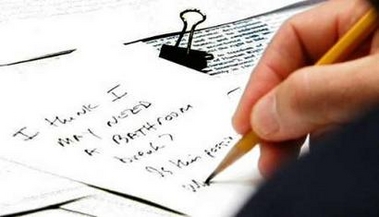
U.S. President George W. Bush writes a note to Secretary of State Condoleezza Rice during a Security Council meeting at the 2005 World Summit and 60th General Assembly of the United Nations in New York September 14.

— Reuters via Yahoo! News.

Hey, when you gotta go, you gotta go. And Bush really needs to go!

[First posted here three years ago.]

Grand Teton National Park (Wyoming)

… was formed on this date in 1950 by combining the much smaller national park established in 1929 (which included just the Tetons and the lakes) and the Jackson Hole National Monument established in 1943. Today the park includes nearly 310,000 acres.

Teton.jpg

Located in northwestern Wyoming, Grand Teton National Park protects stunning mountain scenery and a diverse array of wildlife. The central feature of the park is the Teton Range — an active, fault-block, 40-mile-long mountain front. The range includes eight peaks over 12,000 feet (3,658 m), including the Grand Teton at 13,770 feet (4,198 m). Seven morainal lakes run along the base of the range, and more than 100 alpine lakes can be found in the backcountry.

Elk, moose, pronghorn, mule deer, and bison are commonly seen in the park. Black bears are common in forested areas, while grizzlies are occasionally observed in the northern part of the park. More than 300 species of birds can be observed, including bald eagles and peregrine falcons.

Grand Teton National Park

Black Jack

In all of American history, only two generals have held the rank General of the Armies, George Washington and John J. Pershing. 1

Pershing was born on this date in 1860. He graduated from West Point, 30th in a class of 77, and was stationed at Fort Bayard, New Mexico Territory (near Silver City), serving with General Miles in the last capture of Geronimo. Then he served in the Dakotas at the time of Wounded Knee. Pershing fought in Cuba during the Spanish-American War, and successfully (from the U.S. standpoint) controlled an insurrection while serving in the Philippines.

Still a captain, Pershing was promoted to Brigadier General by order of President Theodore Roosevelt in 1906. That is, he skipped major, lieutenant colonel and colonel. The fact that Pershing’s father-in-law was a U.S. senator and the president had attended the Pershings’ wedding had no bearing on this, of course.

Pershing’s wife and three daughters were killed in a fire in 1915 at their home at the Presidio in San Francisco while Pershing was commander of the Eighth Brigade there. A son survived.

In 1916-1917 Pershing led 12,000 American troops into Mexico in a failed attempt to capture Pancho Villa after his raid on Columbus, New Mexico.

In 1917, Pershing was named commander of the American Expeditionary Force — ultimately 2-1/2 million men. In his memoirs he wrote that his two biggest problems were keeping the British and French from incorporating the American army into theirs and getting the supplies he needed for such a large force.

Pershing was welcomed home a hero in 1919, became army chief of staff, and retired from active duty in 1924.

He died in 1948.

Pershing was nicknamed “Black Jack” as a result of his time as an officer in the 10th Cavalry, a unit of African-American or “Buffalo” soldiers.


1Pershing was awarded the rank in 1919 while still in the Army. Washington was promoted to the rank in 1976 as part of the Bicentennial. Grant, Sherman and Sheridan were four star generals of the army. Marshall, MacArthur, Eisenhower, Arnold and Bradley were five star generals of the army. Washington wore three stars, but by law is the highest ranking army officer. Pershing is second; he wore four gold stars.

September 13th

Today is the birthday

… of Milton S. Hershey, born on this date in 1857. Hershey, who only completed the fourth grade, developed a formula for milk chocolate that made what had been a luxury product into the first nationally marketed candy.

… of Sherwood Anderson, born on this date in 1876 in Camden, Ohio.

[Anderson] is best known for his short stories, “brooding Midwest tales” which reveal “their author’s sympathetic insight into the thwarted lives of ordinary people.” Between World War I and World War II, Anderson helped to break down formulaic approaches to writing, influencing a subsequent generation of writers, most notably Ernest Hemingway and William Faulkner. Anderson, who lived in New Orleans for a brief time, befriended Faulkner there in 1924 and encouraged him to write about his home county in Mississippi. (Library of Congress)

… of Bill Monroe, born on this date in 1911. The Father of Bluegrass Music was inducted into the Country Music Hall of Fame in 1970. In 1993, Monroe was a recipient of the Lifetime Achievement Award from the National Academy of Recording Arts and Sciences, an honor that placed him in the company of Louis Armstrong, Ray Charles and Paul McCartney. Monroe died in 1996.

Monroe is also an inductee of the Rock and Roll Hall of Fame:

Musical pioneer Bill Monroe is known as “the father of bluegrass music.” While Monroe would humbly say, “I’m a farmer with a mandolin and a high tenor voice,” he and His Blue Grass Boys essentially created a new musical genre out of the regional stirrings that also led to the birth of such related genres as Western Swing and honky-tonk. From his founding of the original bluegrass band in the Thirties, he refined his craft during six decades of performing. In so doing, he brought a new level of musical sophistication to what had previously been dismissed as “rural music.” Both as ensemble players and as soloists, Monroe and his Blue Grass Boys upped the ante in their chosen genre much the way Duke Ellington’s and Miles Davis’s bands did in jazz. Moreover, the tight, rhythmic drive of Monroe’s string bands helped clear a path for rock and roll in the Fifties. That connection became clear when a reworked song of Monroe’s, “Blue Moon of Kentucky,” became part of rock and roll history as the B side of Elvis Presley’s first single for Sun Records in 1954. Carl Perkins claimed that the first words Presley spoke to him were, “Do you like Bill Monroe?”

… of Mel Torme, born on this date in 1925. The “Velvet Fog” was a wonderful jazz singer, but his greatest legacy is writing “The Christmas Song” — “Chestnuts roasting on an open fire…”. Torme died in 1999.

And it’s the anniversary of the inspiration for our most famous song:

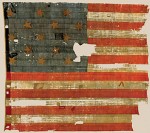
As the evening of September 13, 1814, approached, Francis Scott Key, a young lawyer who had come to negotiate the release of an American friend, was detained in Baltimore harbor on board a British vessel. Throughout the night and into the early hours of the next morning, Key watched as the British bombed nearby Fort McHenry with military rockets. As dawn broke, he was amazed to find the Stars and Stripes, tattered but intact, still flying above Fort McHenry.

Key’s experience during the bombardment of Fort McHenry inspired him to pen the words to “The Star-Spangled Banner.” He adapted his lyrics to the tune of a popular drinking song, “To Anacreon in Heaven,” and the song soon became the de facto national anthem of the United States of America, though Congress did not officially recognize it as such until 1931.

Library of Congress

Star-spangled Banner
 
 
The Smithsonian Institution, which has the original “star-spangled banner,” has details about the flag.


On the road again

Debby, official younger sister of NewMexiKen, has graced these pages from the earliest days with her comments and from time-to-time her stories. You may remember not long ago reading about her day on horseback rounding up cattle.

Anyway for family reasons — among others, she just became a grandma — Debby has moved back to Arizona. And she loves being out in the country. How far out in the country you ask. Would you believe she just moved into a town and got P.O. Box 5?

Blame Ike

Wholesale — that’s wholesale — gasoline hit $4.85 today, up from $3 Tuesday because the refineries in southeast Texas are closed and aren’t making any gasoline for now.

That’s wholesale — four-eighty-five a gallon.

But the price of crude oil is down to near $100 you say. How can that be?

Because the southeast Texas refineries are closed. They aren’t buying any crude oil because they aren’t using what they have because they aren’t making any gasoline.

Best line of the day, so far

I have had a strong and a long relationship on national security, I’ve been involved in every national crisis that this nation has faced since Beirut, I understand the issues, I understand and appreciate the enormity of the challenge we face from radical Islamic extremism.

I am prepared. I am prepared. I need no on-the-job training.

I wasn’t a mayor for a short period of time. I wasn’t a governor for a short period of time.

John McCain, Republican debate, October 21, 2007

Canyonlands National Park (Utah)

… was authorized on this date 44 years ago. From the National Park Service:

Canyonlands.jpg

Canyonlands National Park preserves a colorful landscape of sedimentary sandstones eroded into countless canyons, mesas and buttes by the Colorado River and its tributaries. The Colorado and Green rivers divide the park into four districts: the Island in the Sky, the Needles, the Maze and the rivers themselves. While the districts share a primitive desert atmosphere, each retains its own character and offers different opportunities for exploration and learning.

Nine Twelve

George Jones is 77.

In many ways Jones is one of country music’s last vital links to its own rural past—a relic from a long-gone time and place before cable TV and FM rock radio and shopping malls, an era when life still revolved around the Primitive Baptist Church, the honky-tonk down the road, and Saturday nights listening to the Grand Ole Opry on the radio. The fact that Jones himself has changed little over the years, and at times seems to be genuinely bewildered by the immensity of his own talent and the acclaim it has brought him, have merely enhanced his credibility.

Like Hank Williams before him, Jones has emerged—quite unintentionally—as an archetype of an era that most likely will never come around again. He is a singer who has earned his stature the hard way: by living his songs. His humble origins, his painful divorces, his legendary drinking and drugging, and his myriad financial, legal, and emotional problems have, over the years, merely confirmed his sincerity and enhanced his mystique, earning him a cachet that, in country music circles, approaches canonization.

Country Music Hall of Fame

Maria Muldaur is 65. Muldaur, famous for “Midnight at the Oasis,” has an album of Shirley Temple songs (2004).

Joe Pantoliano is 57.

Ruben Studdard is 30.

Yao Ming is 28.

Oscar-winner Jennifer Hudson is 27 today.

Jesse Owens was born on September 12th in 1913. ESPN.com ranked Owens the sixth best athlete of the 20th century:

On May 25 [1935] in Ann Arbor, Mich., Owens couldn’t even bend over to touch his knees. But as the sophomore settled in for his first race, he said the pain “miraculously disappeared.”

3:15 — The “Buckeye Bullet” ran the 100-yard dash in 9.4 seconds to tie the world record.

3:25 — In his only long jump, he leaped 26-8 1/4, a world record that would last 25 years.

3:34 — His 20.3 seconds bettered the world record in the 220-yard dash.

4:00 — With his 22.6 seconds in the 220-yard low hurdles, he became the first person to break 23 seconds in the event.

For most athletes, Jesse Owens’ performance one spring afternoon in 1935 would be the accomplishment of a lifetime. In 45 minutes, he established three world records and tied another.

But that was merely an appetizer for Owens. In one week in the summer of 1936, on the sacred soil of the Fatherland, the master athlete humiliated the master race.

100 Photographs That Changed the World

NewMexiKen posts this every September 12, so no need to be different this — the sixth — year. Here’s what I wrote two years ago:

View 28 of the 100 Photographs that Changed the World, originally from Life magazine. NewMexiKen has posted this link each year on this date and I hesitated this morning. I mean, why repeat it for the fourth time?

I then went and looked at the 28 photos and said to myself, “Oh, that’s why.”

H(enry) L(ouis) Mencken

… essayist and editor, was born on September 12th in 1880. I’ve posted many of these before, but Mencken has some great lines that I never tire of reading:

  • Injustice is relatively easy to bear; what stings is justice.
  • A judge is a law student who marks his own examination papers.
  • It is even harder for the average ape to believe that he has descended from man.
  • The first kiss is stolen by the man; the last is begged by the woman.
  • It is now quite lawful for a Catholic woman to avoid pregnancy by a resort to mathematics, though she is still forbidden to resort to physics or chemistry.
  • Say what you will about the Ten Commandments, you must always come back to the pleasant fact that there are only ten of them.
  • No one in this world, so far as I know — and I have researched the records for years, and employed agents to help me — has ever lost money by underestimating the intelligence of the great masses of the plain people. Nor has anyone ever lost public office thereby.
  • Every decent man is ashamed of the government he lives under.
  • I believe in only one thing: liberty; but I do not believe in liberty enough to want to force it upon anyone.

Magic Marker Strategy

Live along the Texas coast and don’t want to evacuate? Consider this.

Instead of relying on a “Good Samaritan” policy – the fantasy in New Orleans that everyone would take care of the neighbors – the Virginia rescue workers go door to door. If people resist the plea to leave, Mr. Judkins told The Daily Press in Newport News, rescue workers give them Magic Markers and ask them to write their Social Security numbers on their body parts so they can be identified.

“It’s cold, but it’s effective,” Mr. Judkins explained.

Reported by John Tierney in 2005.

Beneath the veneer

Palin doesn’t have the foggiest idea what the Bush Doctrine is. Literally, not a clue about the guiding U.S. foreign policy principle of the last seven years. When she tried to fudge it, her ignorance on the issue was even more glaring.

Second, she really didn’t want to answer an important question about U.S. strikes in Pakistan. It’s not like this was a curveball — the issue was in yesterday’s New York Times. Eventually, after trying to wiggle out of the question, Palin eventually seemed to support unilateral strikes, which contradicts the stated McCain policy.

Third, Palin believes Russia was “unprovoked” in its military incursion against Georgia. That’s just wrong.

Fourth, instead of waving off hypothetical questions about wars with massive nuclear powers, Palin openly suggested it “perhaps” would be necessary to go to war with Russia.

Steve Benen, The Washington Monthly

Why it matters

James Fallows explains what Sarah Palin’s ignorance of the Bush Doctrine (in her interview with Charles Gibson) reveals. This is an excerpt from a longer piece worth reading in full.

Each of us has areas we care about, and areas we don’t. If we are interested in a topic, we follow its development over the years. And because we have followed its development, we’re able to talk and think about it in a “rounded” way. We can say: Most people think X, but I really think Y. Or: most people used to think P, but now they think Q. Or: the point most people miss is Z. Or: the question I’d really like to hear answered is A.

Here’s the most obvious example in daily life: Sports Talk radio.
 
Mention a name or theme — Brett Favre, the Patriots under Belichick, Lance Armstrong’s comeback, Venus and Serena — and anyone who cares about sports can have a very sophisticated discussion about the ins and outs and myth and realities and arguments and rebuttals.

. . .

What Sarah Palin revealed is that she has not been interested enough in world affairs to become minimally conversant with the issues. Many people in our great land might have difficulty defining the “Bush Doctrine” exactly. But not to recognize the name, as obviously was the case for Palin, indicates not a failure of last-minute cramming but a lack of attention to any foreign-policy discussion whatsoever in the last seven years.

Gasoline price status report

According to AAA, the cost of a gallon of unleaded regular gasoline nationwide averages 10.8% less than the record high price in mid-July.

The price today is still 30% higher than it was a year ago.

Average for unleaded regular September 11, 2008: $3.671.

The price of a barrel of crude oil is down 31% since July.

HOWEVER, this from AP:

The wholesale price of gasoline ranged from $4 to nearly $5 a gallon at the U.S. Gulf Coast on Thursday, said Tom Kloza, publisher and chief oil analyst of the Oil Price Information Service in Wall, N.J. That was up significantly from about $3 to $3.30 a gallon on Wednesday, Kloza said.

“We’re looking at the highest wholesale prices ever for a huge swath of the country,” he said. “People understand that regardless what happens with Ike, it’s going to shut down the biggest refining cluster for a period of five, six, seven days.”

The wholesale price of gasoline is what refineries charge retailers. Retailers then mark up those prices for the customer so they can make a profit — so if these wholesale prices hold, it could mean that pump prices for U.S. drivers easily break through the July 17 record of $4.114 a gallon.

September 11

Two immortal football coaches share this birthday. Paul “Bear” Bryant was born on this date in 1913. Tom Landry was born on this date in 1924.

Musician Leo Kottke is 63.

One-time Oscar nominee Amy Madigan is 58.

Sportscaster Lesley Visser is 55. Visser was the first woman to receive the Pro Football Hall of Fame’s Pete Rozelle Radio-Television Award.

Oscar nominee for best supporting actress for her performance in Sideways, Virginia Madsen is 47.

Kristy McNichol is 46.

Harry Connick Jr. is 41. He grew up in New Orleans where his father was D.A.

Ludacris is 31.

William Sydney Porter was born on this date in 1852. We know him as O. Henry. According to The Writer’s Almanac last year, “He wrote his most famous story, ‘The Gift of the Magi,’ in three hours, in the middle of the night, with his editor sleeping on his couch.” NewMexiKen had posted that story in its entirety. Another particular favorite is The Ransom of Red Chief.

McCain’s Health Care Tax Increase

John McCain wants to tax your employer-provided health care benefits. He wants to replace those benefits with an insufficient tax credit–$2500 for individuals and $5000 for families (the average cost per family is for health insurance is $12000).
. . .

Obama campaign has let things go this far without pointing out that McCain–who opposes the energy bill because it would increase taxes on oil companies–is actually proposing a tax increase on health care benefits for American workers. But that is precisely what the Senator from Arizona is doing.

Joe Klein

Best line of the day, so far

“General Petraeus kept saying, ‘Things are going to be worse before they get better.’ . . . He wasn’t trying to sell anything. He was very adamant about telling it like it is: ‘Don’t put lipstick on the pig.’”

From “The General’s Dilemma” in last week’s New Yorker. Quoting Petraeus is his executive officer, Peter Mansoor.