NewMexiKen
Half Wisdom • Half Whimsy • Half Wit

Archive for September 13, 2008

Black Jack

In all of American history, only two generals have held the rank General of the Armies, George Washington and John J. Pershing. 1

Pershing was born on this date in 1860. He graduated from West Point, 30th in a class of 77, and was stationed at Fort Bayard, New Mexico Territory (near Silver City), serving with General Miles in the last capture of Geronimo. Then he served in the Dakotas at the time of Wounded Knee. Pershing fought in Cuba during the Spanish-American War, and successfully (from the U.S. standpoint) controlled an insurrection while serving in the Philippines.

Still a captain, Pershing was promoted to Brigadier General by order of President Theodore Roosevelt in 1906. That is, he skipped major, lieutenant colonel and colonel. The fact that Pershing’s father-in-law was a U.S. senator and the president had attended the Pershings’ wedding had no bearing on this, of course.

Pershing’s wife and three daughters were killed in a fire in 1915 at their home at the Presidio in San Francisco while Pershing was commander of the Eighth Brigade there. A son survived.

In 1916-1917 Pershing led 12,000 American troops into Mexico in a failed attempt to capture Pancho Villa after his raid on Columbus, New Mexico.

In 1917, Pershing was named commander of the American Expeditionary Force — ultimately 2-1/2 million men. In his memoirs he wrote that his two biggest problems were keeping the British and French from incorporating the American army into theirs and getting the supplies he needed for such a large force.

Pershing was welcomed home a hero in 1919, became army chief of staff, and retired from active duty in 1924.

He died in 1948.

Pershing was nicknamed “Black Jack” as a result of his time as an officer in the 10th Cavalry, a unit of African-American or “Buffalo” soldiers.


1Pershing was awarded the rank in 1919 while still in the Army. Washington was promoted to the rank in 1976 as part of the Bicentennial. Grant, Sherman and Sheridan were four star generals of the army. Marshall, MacArthur, Eisenhower, Arnold and Bradley were five star generals of the army. Washington wore three stars, but by law is the highest ranking army officer. Pershing is second; he wore four gold stars.
September 13th

Today is the birthday

… of Milton S. Hershey, born on this date in 1857. Hershey, who only completed the fourth grade, developed a formula for milk chocolate that made what had been a luxury product into the first nationally marketed candy.

… of Sherwood Anderson, born on this date in 1876 in Camden, Ohio.

[Anderson] is best known for his short stories, “brooding Midwest tales” which reveal “their author’s sympathetic insight into the thwarted lives of ordinary people.” Between World War I and World War II, Anderson helped to break down formulaic approaches to writing, influencing a subsequent generation of writers, most notably Ernest Hemingway and William Faulkner. Anderson, who lived in New Orleans for a brief time, befriended Faulkner there in 1924 and encouraged him to write about his home county in Mississippi. (Library of Congress)

… of Bill Monroe, born on this date in 1911. The Father of Bluegrass Music was inducted into the Country Music Hall of Fame in 1970. In 1993, Monroe was a recipient of the Lifetime Achievement Award from the National Academy of Recording Arts and Sciences, an honor that placed him in the company of Louis Armstrong, Ray Charles and Paul McCartney. Monroe died in 1996.

Monroe is also an inductee of the Rock and Roll Hall of Fame:

Musical pioneer Bill Monroe is known as “the father of bluegrass music.” While Monroe would humbly say, “I’m a farmer with a mandolin and a high tenor voice,” he and His Blue Grass Boys essentially created a new musical genre out of the regional stirrings that also led to the birth of such related genres as Western Swing and honky-tonk. From his founding of the original bluegrass band in the Thirties, he refined his craft during six decades of performing. In so doing, he brought a new level of musical sophistication to what had previously been dismissed as “rural music.” Both as ensemble players and as soloists, Monroe and his Blue Grass Boys upped the ante in their chosen genre much the way Duke Ellington’s and Miles Davis’s bands did in jazz. Moreover, the tight, rhythmic drive of Monroe’s string bands helped clear a path for rock and roll in the Fifties. That connection became clear when a reworked song of Monroe’s, “Blue Moon of Kentucky,” became part of rock and roll history as the B side of Elvis Presley’s first single for Sun Records in 1954. Carl Perkins claimed that the first words Presley spoke to him were, “Do you like Bill Monroe?”

… of Mel Torme, born on this date in 1925. The “Velvet Fog” was a wonderful jazz singer, but his greatest legacy is writing “The Christmas Song” — “Chestnuts roasting on an open fire…”. Torme died in 1999.

And it’s the anniversary of the inspiration for our most famous song:

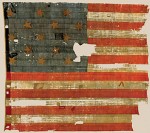
As the evening of September 13, 1814, approached, Francis Scott Key, a young lawyer who had come to negotiate the release of an American friend, was detained in Baltimore harbor on board a British vessel. Throughout the night and into the early hours of the next morning, Key watched as the British bombed nearby Fort McHenry with military rockets. As dawn broke, he was amazed to find the Stars and Stripes, tattered but intact, still flying above Fort McHenry.

Key’s experience during the bombardment of Fort McHenry inspired him to pen the words to “The Star-Spangled Banner.” He adapted his lyrics to the tune of a popular drinking song, “To Anacreon in Heaven,” and the song soon became the de facto national anthem of the United States of America, though Congress did not officially recognize it as such until 1931.

Library of Congress

Star-spangled Banner
 
 
The Smithsonian Institution, which has the original “star-spangled banner,” has details about the flag.